The Newsom administration released its revised proposal for the California 2026-27 budget on May 14, which includes the reinstatement of the Medi-Cal asset limit at $2,000 for individuals/$3,000 for couples and cuts to the In-Home Supportive Services program.
Addressing Gaps in Emergency Response Symptoms for Older Adults Impacted by Wildfires
Apr 2026
California
Long-Term Care
In January 2025, residents of Los Angeles County survived extensive wildfires and navigated its aftermath.Widespread evacuations resulted in the displacement of many older adults, who faced heightened risks due to mobility limitations, chronic conditions, sensory impairments, reliance on medications and medical equipment, and increased exposure to smoke and stress.
The rising costs of long-term services and supports (LTSS), also known as long-term care, are one of the biggest—and least understood—risks facing older adults and their families. Nearly 70 percent of Americans will need LTSS, yet most lack meaningful protection against the financial and practical challenges that come with needing help over time. Middle-income families are especially vulnerable, often earning too much to qualify for Medicaid while being unable to afford high out-of-pocket expenses.
Finding a Path to Support Aging in Place in California
Nov 2025
California, National
Long-Term Care, Medicare-Medicaid Integration
Most older adults want to remain at home as they age, yet rising costs of health care and long-term services and supports (LTSS), also known as long-term care, and a fragmented care delivery system create barriers to doing so. This is particularly true for older adults with low incomes, who often experience complex care needs and chronic conditions. Efforts to integrate care for this population (e.g. coordinating Medicaid and Medicare services, integrating health care and housing) have had varying levels of success, and many remain siloed or face issues of scalability.
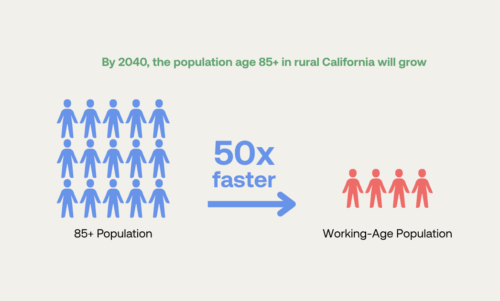
Rural older adults face distinct realities that California’s statewide planning must address. To support equitable solutions, we are pleased to share three new policy briefs. These briefs provide legislators and advocates with clear, actionable recommendations to address the needs of rural older adults, a population that is growing rapidly and already straining under workforce shortages, housing insecurity, and health disparities.
H.R.1, the federal reconciliation act signed into law in July 2025, will have significant impact on older Californians and Californians with disabilities. Medi-Cal, Medicare, Affordable Care Act (ACA) premium tax credits, and CalFresh will be scaled back, limiting access to these vital programs.
This breakdown from The SCAN Foundation details how the enacted budget for California’s fiscal year (FY) 2025-26 budget will affect older adults and people with disabilities in California.
This breakdown from The SCAN Foundation details how Governor Newsom’s revised proposal for California’s fiscal year (FY) 2025-26 budget will affect older adults and people with disabilities in California.
Compendium of Federal Long-Term Services and Supports Financing Policy Options
May 2025
National
Long-Term Care
This searchable resource captures more than 30 years of federal legislation, policy proposals, private market solutions, and research to address the rising costs and limited accessibility of long-term services and supports.
A Toolkit for Developing Local Multisector Plans for Aging in Rural Areas
Jan 2025
National
Multisector Plans for Aging
This toolkit is designed to support rural community leaders in developing local MPAs. The toolkit recognizes the unique needs and challenges many rural communities face in meeting the needs of older adults.
This policy brief can help California leaders and policymakers prepare for California’s rapidly growing older adult population. By leveraging deep insights, this brief contributes to age-friendly policy planning and equitable access to care.
As the aging population rapidly grows and becomes more diverse, state planning efforts should apply best practices to be responsive to the evolving population needs as we all age. Alignment of State Plans on Aging with Multisector Plans for Aging is one such strategy.
Age Proofing AI: Enabling an intergenerational workforce to benefit from AI
Oct 2024
National
Special Projects
Generation’s new research, supported by The SCAN Foundation, explores the challenges and opportunities facing midcareer and older workers in navigating the rise of AI in the workplace.
Assessing the Fintech Market Against Age-Inclusive Standards
Jun 2024
National
Special Projects
Low- to moderate-income older adults face unique financial challenges. This report from the Financial Health Network (FHN) investigates how well fintech solutions on the market today are meeting these unique needs.